
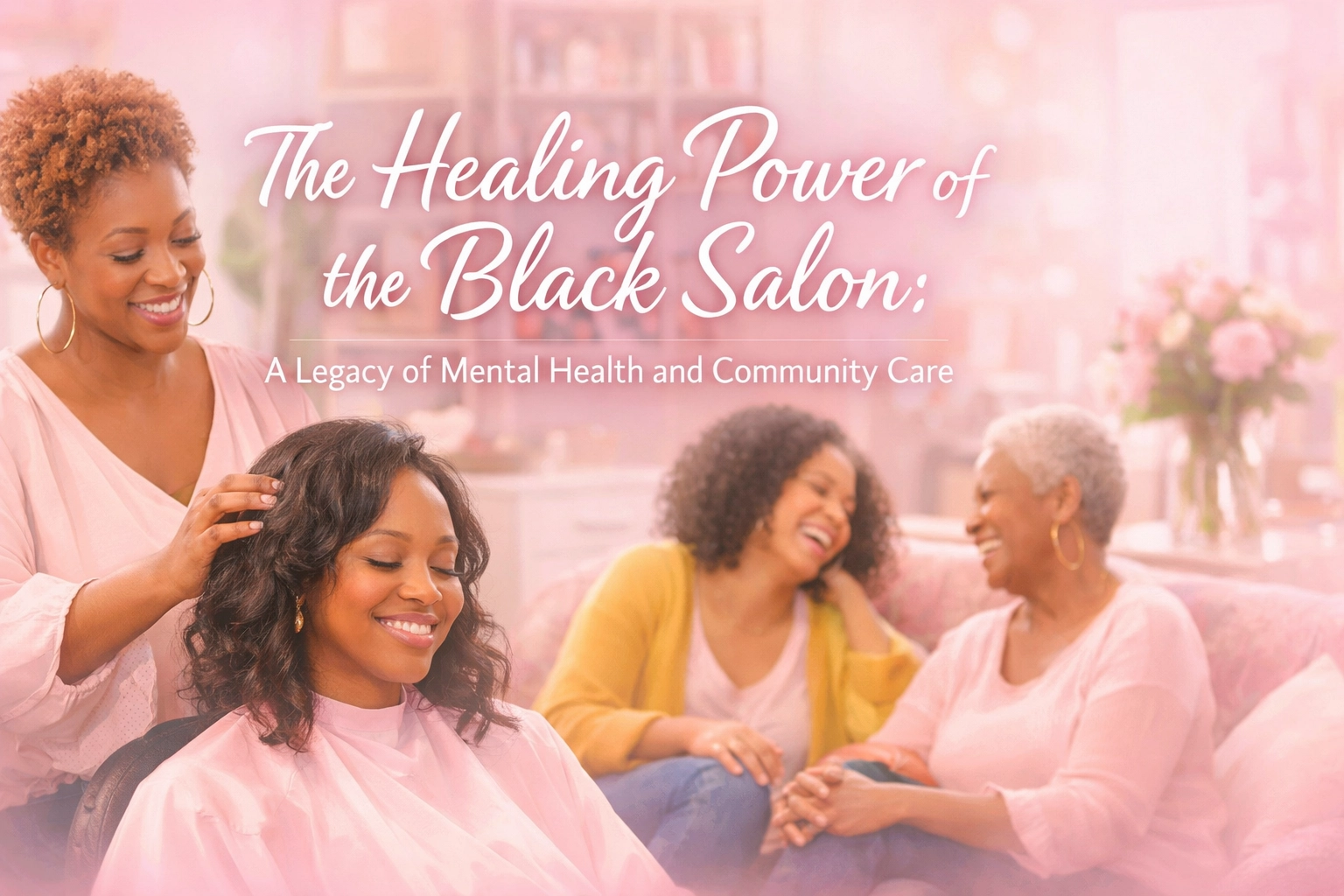
This Black History Month, we're celebrating a legacy that goes far beyond hairstyles and barbershop fades. We're honoring the Black salon and barbershop as what they've always been: sanctuaries, healing spaces, and unofficial mental health centers for our communities.
If you've ever sat in that chair and found yourself opening up about things you hadn't planned to share: about stress at work, struggles at home, or that weight you've been carrying: you already know what we're talking about. The Black salon isn't just where we get our hair done. It's where we get our minds right, too.
More Than a Haircut: The Historical Roots of Healing Spaces
Since the turn of the 19th century, barbershops and beauty salons have served as sanctuaries for Black Americans. These weren't just businesses: they were safe havens where Black people could be fully themselves, discuss community issues without fear, and find genuine connection in a world that often denied them dignity.
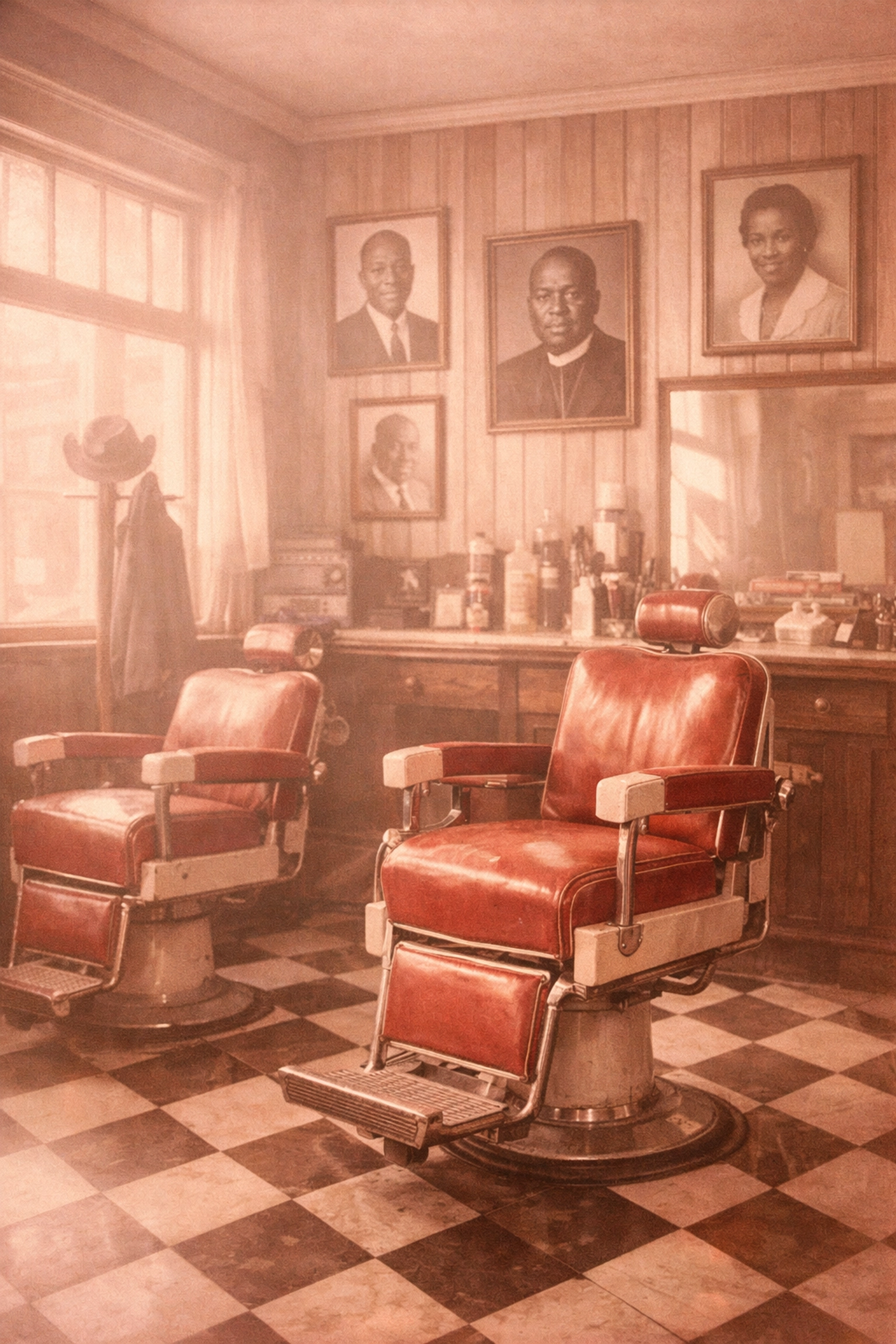
Think about it: Where else could a Black person in the 1920s, '40s, or '60s sit comfortably for an hour or two, engage in honest conversation about politics, share vulnerabilities, and leave feeling seen and heard? The salon became that rare space where judgment stayed at the door and community walked right in.
These spaces functioned as informal community centers long before anyone thought to call them that. People played games, debated current events, shared job opportunities, and looked out for each other's well-being. The person holding the clippers or the curling iron wasn't just a service provider: they were a confidant, an advisor, and sometimes, a lifeline.
The Mental Health Crisis We Can't Ignore
Here's the hard truth: Black communities face significant mental health disparities. According to recent data, suicide rates among Black men have been rising, and many in our communities still struggle with the stigma around seeking mental health support. Traditional therapy can feel inaccessible: financially, geographically, or culturally. There's often a deep-rooted mistrust of medical systems that have historically failed or even harmed Black people.
But you know where people do feel comfortable? In the barbershop chair. At the salon sink. In spaces that have earned trust over generations.
That's why the evolution of salons and barbershops into formalized mental health support spaces isn't revolutionary: it's revelatory. We're finally recognizing and honoring what these spaces have always done, and giving them the tools to do it even better.
Modern Movements: Barbershops as Mental Health Hubs
Across the country, innovative programs are formalizing what Black salons have been doing informally for over a century. The Confess Project has trained over 1,400 barbers across 47 cities to serve as mental health mentors for Black men and boys. Their year-long training program, designed with mental health experts, teaches barbers to listen effectively, reduce stigma, and connect clients with resources. They estimate reaching 2 million people in 2022 alone.
Similarly, Barbershop Talk with Brothers, operated by the Arthur Ashe Institute for Urban Health, has partnered with more than 170 barbershops and salons to provide health education training. Some participating barbershops now feature kiosks where customers can privately search for resources related to food, housing, and counseling.
Why do these programs work? Three key reasons:
Deep Trust – Barbers and stylists maintain long-standing relationships with their clients. When you've been going to the same person for years, opening up about depression, anxiety, or stress feels natural, not forced.
Accessibility – With over 100,000 barbers providing services across rural, suburban, and urban areas in the U.S., these spaces reach communities that may distrust traditional medical systems or face significant barriers to mental health care.
Cultural Comfort – There's no clinical coldness, no intake forms, no insurance hurdles. Just conversation, connection, and care that feels familiar.
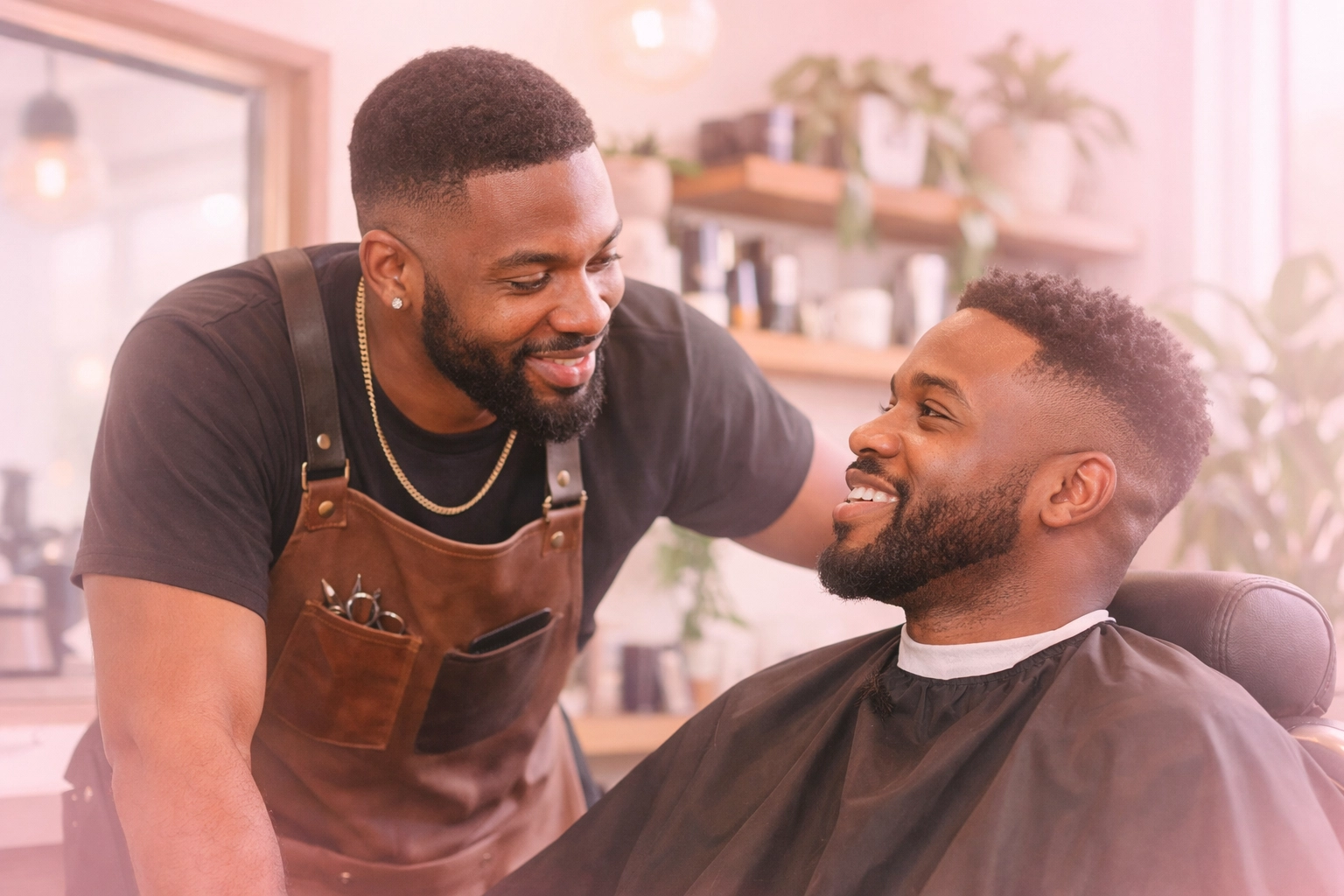
Research backs this up. Studies examining barber-based mental health programs show they create measurable, lasting change. Clients report processing personal challenges during their appointments and applying insights from these conversations to improve their lives.
Pelagie Foundation's Salon Therapy: Honoring the Legacy, Expanding the Healing
At Pelagie Foundation, we believe in meeting people where they are: and sometimes, where you are is in a salon chair. That's why we've integrated behavioral health services directly into the salon experience through Christ-Lee's Hair Boutique.
We're not trying to reinvent the wheel. We're honoring a legacy that's been healing our communities for generations and giving it professional support. Our approach recognizes that mental wellness doesn't always start in a therapist's office. Sometimes it starts with a wash and set. Sometimes it begins when someone asks, "How are you really doing?" and genuinely waits for the answer.
Our Salon Therapy model combines:
✓ Professional cosmetology services that restore confidence and dignity
✓ Trained staff who understand the connection between self-care and mental wellness
✓ Access to behavioral health resources for clients who need additional support
✓ A judgment-free environment where vulnerability is welcomed, not stigmatized
✓ Community connection that reminds people they're not alone in their struggles
We're particularly focused on serving those who've been underserved by traditional mental health systems: veterans, immigrants, BIPOC communities, and individuals experiencing homelessness or housing insecurity. Because everyone deserves a space where they can feel whole.

Breaking Down Barriers, One Appointment at a Time
The beauty of integrating mental health support into salon spaces is how naturally it dismantles barriers. There's no "I'm going to therapy" announcement required. No explanation needed for taking care of yourself. You're simply getting your hair done: and if you happen to leave feeling lighter mentally and emotionally, that's the magic of the space working as intended.
For many in our communities, shame and stigma around mental health remain significant obstacles. The salon provides cover and comfort. It normalizes the conversation. It makes wellness feel achievable rather than clinical.
Our behavioral health services extend beyond the salon walls too, offering telehealth options for continued support. But that first touchpoint: that initial moment of connection and trust: often happens in the chair.
Join the Movement: Your Role in Community Healing
This Black History Month, we're not just celebrating history: we're actively creating it. The work of community healing doesn't belong to therapists alone. It belongs to all of us: the barbers, the stylists, the clients who show up authentically, and the organizations willing to innovate.
If you're a salon or barbershop owner interested in bringing this model to your space, we want to talk. If you're someone who needs support and isn't sure where to start, we're here. If you believe in the power of community care and want to support this work, there are ways to get involved.
The Black salon has always been a place of transformation: not just physical, but spiritual and emotional too. At Pelagie Foundation, we're honoring that legacy by ensuring these sacred spaces can continue their healing work for generations to come.
Ready to experience the healing power of community-centered care? Learn more about our Salon Therapy approach at Christ-Lee's Hair Boutique or call us at 470-356-6285. Because you deserve care that feels like home.
Pelagie Foundation Ltd is a 501(c)(3) nonprofit organization dedicated to empowering underserved communities through innovative behavioral health, housing support, and community care programs. Learn more at pelagie.org.